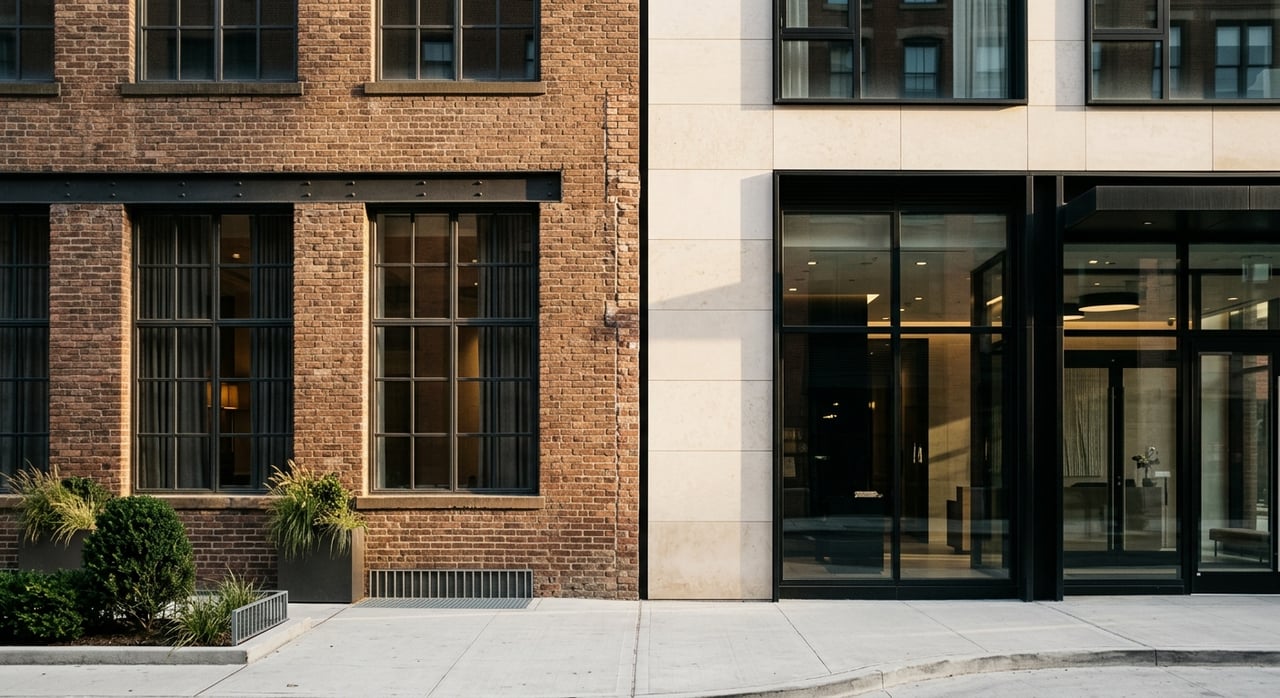
If you are choosing between a waterfront condo and an inland loft in Williamsburg, you are not just picking a floor plan. You are choosing between two very different ownership experiences in one of New York City’s most in-demand neighborhoods. The right fit depends on how you weigh building style, legal due diligence, flood exposure, and long-term use. Let’s dive in.
Why Williamsburg draws buyers
Williamsburg sits within the broader Greenpoint-Williamsburg market, which remains one of the city’s most active and expensive areas. According to the Furman Center, it was New York City’s 5th largest neighborhood by population in 2024, with the 12th highest median income and the 10th most expensive rents.
That demand shows up in the housing numbers too. From 2010 to 2025, the neighborhood added 27,675 housing units, while 2024 median gross rent reached $2,610 and vacancy was just 2.1%. In 2025, the median sales price per condo unit was $1,437,780, with 578 condo sales recorded.
For you as a buyer, that means Williamsburg is not a fringe market. It is a mature, high-demand neighborhood where both newer waterfront condos and converted inland lofts attract attention, but often for different reasons.
Waterfront condos in Williamsburg
Waterfront condos in Williamsburg are tied closely to the neighborhood’s redevelopment story. The Department of City Planning shaped the East River frontage to allow taller buildings near the water, lower-rise buildings toward the neighborhood edge, and more open space along the shoreline.
That planning framework matters because the waterfront was designed as more than a private view corridor. It was intended to reconnect the neighborhood to the shoreline through new housing and public open space. So when you buy on the waterfront, you are buying into a regulated edge between private property and public access.
What waterfront living often means
In practical terms, many waterfront properties are part of a broader public-private setting. Under current zoning rules, qualifying waterfront zoning lots must provide public access features such as shore public walkways and upland connections, and these areas are generally open to the public and maintained by the property owner.
The Department of City Planning also states that public access areas are open between dawn and dusk. For you, that means waterfront frontage may feel open and connected, but it is not the same thing as fully private perimeter space.
What can make waterfront condos appealing
Waterfront condos often align with newer construction patterns and planned open-space access. If you value a more contemporary building type, a polished common-area experience, or proximity to the shoreline, this can be a strong fit.
They may also appeal to buyers who want a more standardized ownership product. Compared with older converted building stock, newer condos can offer a more familiar framework for evaluating layout, building systems, and resale positioning.
What to watch carefully
The waterfront comes with added complexity. The city’s planning documents note that waterfront development involves higher infrastructure costs, environmental remediation, a high water table, and public-access requirements.
Climate exposure is also part of the analysis. NYC’s Flood Hazard Mapper is specifically intended to show current coastal flood hazards and how they may increase with climate change, while NYC Health reports that 26.6% of Williamsburg-Bushwick residents live in hurricane evacuation zones.
That does not mean every waterfront condo carries the same risk profile. It means you should review parcel-level flood exposure rather than assuming that all buildings near the water are equally affected.
Inland lofts in Williamsburg
If waterfront condos reflect newer planning, inland lofts reflect Williamsburg’s industrial past. The Department of City Planning describes older industrial loft buildings along West Street, near North 11th Street and Berry Street, and along North 3rd Street, with many converted partly or wholly to residential use.
These loft clusters sit within mixed-use areas that blend older residential buildings, converted loft buildings, light industrial uses, and some underused parcels. That mix gives inland loft ownership a very different feel from a newer waterfront condo.
Why lofts stand out
Converted lofts tend to offer a less standardized product. Their appeal often comes from the underlying building fabric, including scale, layout differences, and a sense of architectural history rooted in the neighborhood’s industrial land-use pattern.
For some buyers, that distinctiveness is the point. If you want something that feels more building-specific and less uniform than a modern condo tower, an inland loft may fit your priorities better.
Why loft due diligence matters more
With lofts, legal status matters as much as design. The NYC Loft Board says the Loft Law governs the conversion of certain former commercial or manufacturing spaces into safe, rent-stabilized residential units, and current coverage rules still include specific Greenpoint-Williamsburg and North Brooklyn exceptions within Industrial Business Zones.
That means a converted loft can be a very different product from a conventional condo. Some units may be legal residential conversions, some may fall under Loft Board jurisdiction, and some may simply be loft-style in appearance.
Before you treat a loft like any other apartment purchase, you should verify the certificate of occupancy and understand whether Loft Board status applies. In Williamsburg, that is not a side issue. It is core due diligence.
Waterfront condo or loft: key differences
Here is the simplest way to think about the tradeoff. Waterfront condos generally line up with newer planning, public open-space access, and a more regulated shoreline condition. Inland lofts generally line up with older industrial character and more building-specific legal review.
Neither option is automatically better. The stronger choice depends on what kind of risk, lifestyle pattern, and ownership structure you are most comfortable with.
| Factor | Waterfront Condo | Inland Loft |
|---|---|---|
| Setting | East River edge with planned open space | Mixed-use inland blocks with industrial history |
| Building profile | Typically newer and more standardized | Often older, converted, and less uniform |
| Public access context | Waterfront access areas may be open to the public | Usually not defined by shoreline access rules |
| Main diligence issue | Parcel-level flood exposure | Certificate of occupancy and Loft Board status |
| Buyer appeal | Newer product and shoreline access | Character and distinct building identity |
Which option fits your goals?
Your best choice depends on how you plan to use the property and what kind of asset you want to own.
If you prefer a newer condo environment and want the waterfront setting that comes with planned open space, a waterfront condo may be the cleaner fit. You should still analyze flood exposure carefully and understand how public-access rules affect the property’s setting.
If you are drawn to architecture, variation, and the feel of older building stock, an inland loft may be more compelling. But you should go in knowing that legal status and building history deserve close review before you make pricing assumptions.
What investors should keep in mind
Williamsburg remains a market with strong demand signals. The 2.1% vacancy rate, high rent levels, and active condo sales suggest a neighborhood where both product types can attract buyers and tenants, though likely in somewhat different sub-markets.
From an investment perspective, this is less about choosing a universally better product and more about matching the asset to your strategy. A waterfront condo may align with buyers who want newer planning context and a more conventional condo structure, while a loft may attract buyers or renters who value character and a less standardized housing type.
That distinction is important because real estate value is not only about the block or the view. In Williamsburg, it is also about legality, location within the neighborhood, and how clearly the product fits the next buyer’s expectations.
Smart due diligence before you buy
No matter which direction you lean, a few diligence steps matter most in Williamsburg.
- Review parcel-level flood exposure using New York City flood mapping tools
- Confirm the building’s certificate of occupancy
- Verify whether a loft building falls under Loft Board jurisdiction
- Understand whether waterfront public-access requirements affect the property setting
- Compare the unit against similar product types, not just broad neighborhood averages
In a market this competitive and expensive, details drive outcomes. The better your diligence, the more confidence you can have in both your purchase decision and your long-term asset position.
If you are weighing waterfront condos versus lofts in Williamsburg, the smartest move is to compare them through both a lifestyle lens and an investment lens. That is where a more strategic advisory process can make a real difference. To explore Williamsburg opportunities with a team that understands New York real estate as both a home and an asset, connect with The Bracha Group.
FAQs
What is the main difference between Williamsburg waterfront condos and inland lofts?
- Waterfront condos generally align with newer development, shoreline open space, and public-access rules, while inland lofts are more closely tied to older industrial buildings and building-specific legal review.
What should buyers check before purchasing a Williamsburg waterfront condo?
- You should review parcel-level flood exposure, since coastal flood risk can vary by property and should not be assumed based on neighborhood branding alone.
What should buyers verify before purchasing a Williamsburg loft?
- You should confirm the certificate of occupancy and determine whether the building or unit falls under NYC Loft Board jurisdiction.
Are Williamsburg lofts always legal residential conversions?
- No. Some may be legal residential conversions, some may be governed by the Loft Law, and some may only look loft-like without the same legal status.
Is Williamsburg still a strong market for condo buyers and investors?
- Williamsburg remains a high-demand market, with a 2.1% vacancy rate in 2024, 578 condo sales in 2025, and a 2025 median condo sales price of $1,437,780.
How should buyers decide between a Williamsburg condo and loft?
- You should compare them based on your preferred building type, comfort with due diligence, flood exposure, and how you expect the property to function as both a home and a long-term asset.
