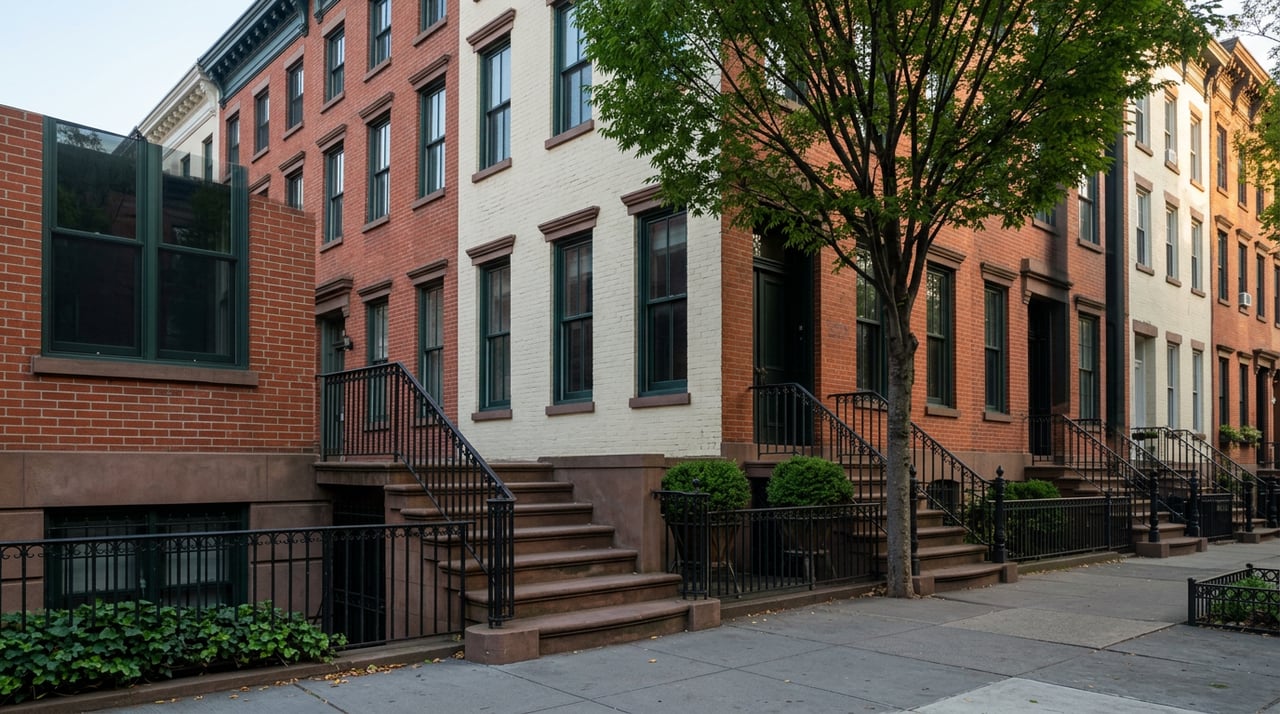
Ask anyone in the West Village what's new in the neighborhood's dining scene and the answer arrives fast: Babbo is back. Stephen Starr bought it, Mark Ladner is back in the kitchen, and the tables at 110 Waverly Place are full again in a way they haven't been in years. It's a good story, and one part of a larger year in the neighborhood's dining scene.
Starr purchased Babbo and its more casual sibling, Lupa, from the Bastianich family, and brought back Ladner, who was on Babbo's opening kitchen team when Mario Batali launched the restaurant in 1998 and later ran Del Posto before it closed in 2021. The reopening landed last fall, which means that by the time this year's calendar turns over, Starr's Babbo will be past its first full year back. Restaurant coverage was still calling it the neighborhood's defining reopening story as recently as January. It's now part of the neighborhood's dining scene.
While that headline kept circulating, three other full-service restaurants and bars opened within walking distance of it, and a fourth is set to open this fall, each with its own chef, its own backers, and its own reason to notice. That's the part of the West Village's 2026 that hasn't gotten the same attention, and it's the part that actually changes what a Tuesday night here looks like.
What You Already Know Isn't Going Anywhere
Before getting into what's new, it's worth naming what hasn't moved, because none of it is disappearing under the weight of new openings. Via Carota still has the hardest table in the neighborhood, with reservations opening thirty days out and disappearing fast. Buvette is still the size of a train car and still worth the wait. Jeffrey's Grocery still runs its L-shaped bar for anyone who doesn't want to wait for a table. Mamoun's has been serving falafel out of the same MacDougal Street storefront since 1971, cash only, order at the counter, no signs of slowing down.
That's the baseline. Here's what got added to it.
Four Restaurant Arrivals, Twelve Months, One Neighborhood
| When | Opening | Address | Behind It |
|---|---|---|---|
| By January 2026 | Le Chêne | West Village | Chefs Alexia Duchêne and Ronan Duchêne Le May |
| April 2026 | Cleo | 621 Hudson Street | Three Top Hospitality (Halley Chambers, Kip Gleize) |
| July 2026 | Keepers | 34 8th Avenue | The Dandelion team (Will Makris, Eytan Sugarman) |
| Fall 2026 | Cafe Charmant | 340 Bleecker Street | Catch Hospitality Group, chef Jake Tyler Brodsky |
Three distinct full-service concepts have opened in the neighborhood inside of a year, and a fourth is set to join them this fall. That's an unusually fast pace of turnover for a footprint this small, and each one is different enough that they're not competing for the same table.
Le Chêne arrived first, a fully French room down to the staff, the white tablecloths, and a forty-four page wine list, run by the husband and wife team of Alexia Duchêne and Ronan Duchêne Le May. It was already one of the hardest reservations in the neighborhood by January.
Cleo followed in April at 621 Hudson Street, a rotisserie concept from Three Top Hospitality, the group behind Margot and Montague Diner. Chef Juliana Latif built the menu around a marinated, twenty-four-hour rotisserie chicken served with zhug, labneh ranch, or a spicy red sauce, alongside branzino, seasonal risotto, and sides like charred green beans.
Keepers opened at the end of July at 34 8th Avenue, the newest project from the team behind Dandelion. Will Makris, who also co-founded Zero Bond and Cucina Alba, and Eytan Sugarman, whose portfolio includes White Horse Tavern and Made in New York Pizza, built a forty-seat neighborhood bar around craft cocktails and tavern-style pies, styled after the old-school camaraderie of a bartender who's also the keeper of the place.
Cafe Charmant is the one still arriving. Catch Hospitality Group, the partnership behind Tilman Fertitta and Eugene Remm's other New York concepts, Or'esh, The Eighty Six, and The Corner Store, is opening a coastal French brasserie at 340 Bleecker Street this fall under chef Jake Tyler Brodsky, a former Eleven Madison Park cook drawing on time at Palm Heights in the Cayman Islands. The room is designed by Rockwell Group, the cocktail program comes from beverage director Lucas Robinson, and the wine list is built by one of Wine Spectator's top fifty sommeliers. It's set to be the most polished of the four, and it's the one that will make the fall count official.
The Corner That Hasn't Changed at All
None of this has touched the neighborhood's actual weekly rhythm, and that's worth sitting with for a second. The Abingdon Square Greenmarket still runs every Saturday morning from 8am to 2pm at Hudson Street and West 12th, on the same patch of land the city acquired back in 1831 and named for the Fourth Earl of Abingdon. It's the kind of fixture that doesn't show up in restaurant coverage because nothing about it is new, which is exactly the point. While three kitchens opened around it and a fourth was still to come, the market itself didn't move an inch, and it's still the thing a longtime resident plans a Saturday morning around before any of the new dinner reservations even open.
The Week Where Both Layers Show Up at Once
If there's a single stretch that puts the new restaurant wave and the neighborhood's older rhythm side by side, it's the turn from September into October. The Village Trip Festival returns across Greenwich Village and the East Village from September 25 through October 4, ten days of music, talks, tours, and food built around the neighborhood's cultural history. Its signature event, a free concert that's always been the festival's closing weekend centerpiece, moves to a new venue this year: Gansevoort Plaza in the Meatpacking District, on Saturday, October 3, with a headlining set from The Slambovian Circus of Dreams. The weekend before, the West Village Record Riot brings a vinyl sale to the neighborhood on Saturday, September 26, the kind of small, specific event that doesn't make anyone's citywide roundup but shows up on plenty of locals' calendars anyway.
That stretch is a good stand-in for how the neighborhood actually works right now. The festival and the record sale are inherited, recurring, tied to institutions that have been running for years. The three restaurants already open are new arrivals layered on top, and a fourth is still to come. Both are true at the same time, and neither cancels the other out.
What This Actually Means If You Live Here
The headline version of the West Village's 2026 is that Babbo came back. The more useful version is that three separate kitchens opened around it in the same twelve months, with a fourth set to open this fall, each backed by people who've built other rooms elsewhere in the city, while the neighborhood's actual anchors, the Saturday greenmarket and the annual fall festival, didn't move at all. If you've been building your evenings around the same five or six spots for years, the map got a little more crowded this year, and the new additions are worth working into the rotation alongside the neighborhood's established favorites.
That's the kind of detail that only shows up when you're paying attention to a neighborhood over time rather than reading it off a single headline. It's also the kind of attention we bring to the buildings themselves. The Bracha Group works with West Village buyers and sellers who already know this neighborhood by its rhythms, not just its listings, and who want a team that reads the block the same way they do. Work With Us.
