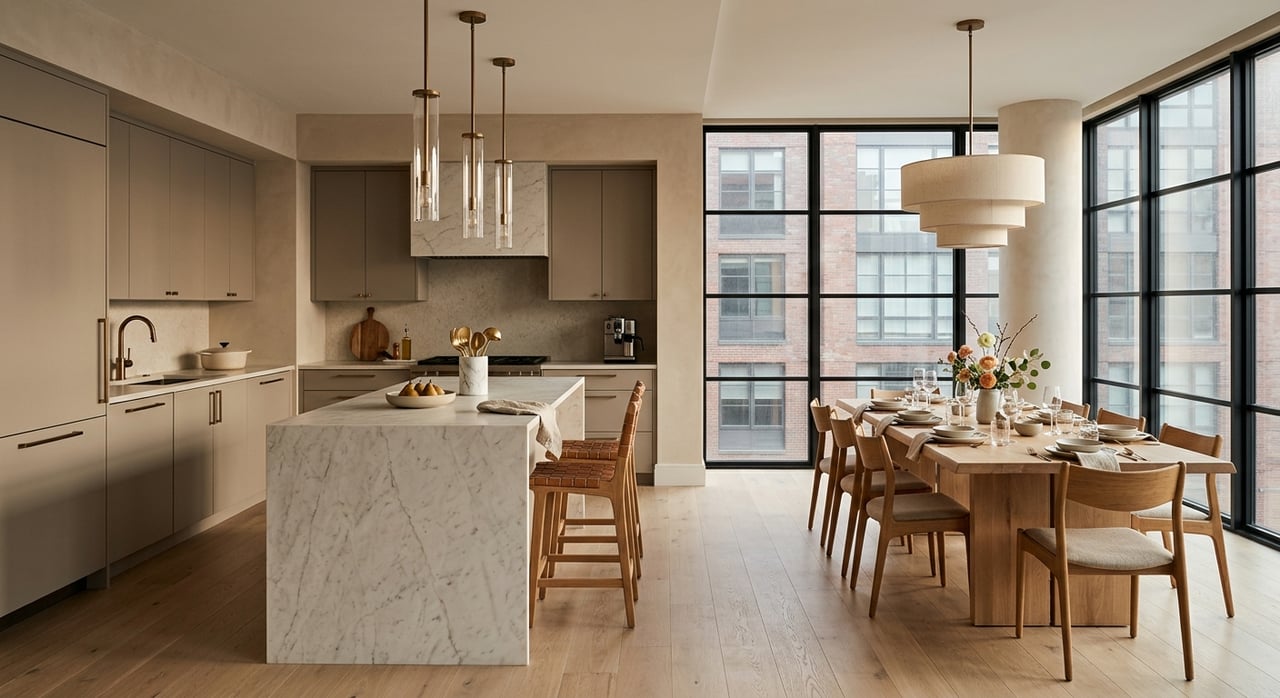
Curious why downtown Manhattan’s new condos feel so different from even a few years ago? If you are buying, selling, or simply watching the market in 10007, you are seeing a clear shift in what developers build, how buildings compete, and what buyers value most. This guide breaks down how new condos in Downtown Manhattan are evolving, what that means for pricing and lifestyle, and how to read the market more strategically. Let’s dive in.
Downtown Manhattan Means More Than One Market
In 10007, the condo story is shaped by its position inside Manhattan Community Board 1, which includes Tribeca, Seaport/Civic Center, Financial District, and Battery Park City. That matters because this part of downtown is not one single product type. It blends Tribeca’s loft and conversion heritage with Financial District high-rise inventory that often sits at a different price point.
That split shows up clearly in current pricing. Recent market trackers place 10007 in a high-price band, with Redfin reporting a median sale price of $2.9 million over the last three months. Zillow places average home value around $3.15 million and median list price near $3.10 million, while Redfin’s condo data shows 51 condos for sale at a median list price of $3.53 million and about 91 days on market.
Tribeca and FiDi Are Pulling Differently
Within the same downtown orbit, Tribeca remains the premium anchor while Financial District continues to offer a more accessible entry point. PropertyShark reported Tribeca’s April 2026 median sale price at $3.4 million, with median price per square foot at $1,786. By comparison, Redfin placed Financial District homes at a $1.45 million median sale price and about $1.26K per square foot.
That gap is not new, but it has become more meaningful as downtown inventory expands. Realtor.com neighborhood medians showed Tribeca asking at $4.5 million versus Financial District at $1.155 million. For buyers, that means “Downtown Manhattan” can describe very different opportunities depending on what type of building, layout, and pricing band you want.
New Condos Are Expanding Downtown Living
One of the biggest changes is that downtown has become more residential overall. According to the Downtown Alliance, Lower Manhattan’s residential population surpassed 70,000 in 2025. Over the prior two years, 14 new residential conversion projects were announced, accounting for at least 3,200 units.
That growth matters because it widens the range of homes available to buyers. The downtown condo story is no longer just about classic lofts or older office-area apartments. It is now a broader residential ecosystem that includes new construction, landmark conversions, and lifestyle-driven full-service buildings.
Supply Is Tight, So Product Is Getting Smarter
Developers are not building at random. They are adjusting product to match demand in a market where supply remains relatively tight. Douglas Elliman’s Q1 2025 new-development report found 4,066 unsold new-development units in Manhattan, a 10-year low, with 2.4 years of supply.
The same report showed that one- and two-bedroom homes made up nearly 60% of the last 12 months of contracts. Properties priced below $4 million accounted for about 70% of activity. That tells you a lot about where the most consistent demand sits, especially downtown.
There are also signs that not every price band performs equally well. Elliman flagged oversupply in some mid-market segments, including one-bedrooms above $3 million and two-bedrooms in the $5 million to $7 million range. In practical terms, newer condo development is evolving toward layouts and pricing that reflect what buyers are actually absorbing.
Amenities Have Become the Main Differentiator
Location still matters, but amenities now do much more of the selling. New downtown condos increasingly compete on full-service lifestyle, convenience, and turnkey ease. That is a major part of how buildings justify price and stand out in a crowded luxury conversation.
At One Park Row, located near Tribeca, Civic Center, and Financial District, the offering includes studio-to-four-bedroom residences with floor-to-ceiling windows and in-unit washer/dryers. The building also includes a fitness center, lounge with catering kitchen, landscaped rooftop terrace, dog run, and private storage.
At 77 Greenwich, the amenity package goes even further into lifestyle branding. Its Cloud Club spans the top floor and roof and includes sky-level lounges, a fitness center, yoga and meditation space, a private pet park, and concierge-style services. These features show how downtown condos are being positioned as complete living environments, not just apartments with a good address.
Conversions Are Evolving Too
Not all of downtown’s new condo energy comes from ground-up towers. Landmark conversions are also changing, and they often offer a very different kind of appeal. In Tribeca, 108 Leonard reflects how older architecture is being adapted to modern expectations.
The building features 9.5- to 16.2-foot ceilings and 20,000 square feet of amenities, including a rooftop garden, gym, spa, 75-foot pool, and underground motor reception. The project was also discussed with co-working or event-space uses for former vault areas. That detail matters because it shows how legacy buildings are being reworked around the way people live now.
Downtown Luxury Is No Longer One Look
The old idea that downtown luxury means only loft living no longer holds. Today, downtown luxury can mean a glassy full-service condo with rooftop spaces and pet amenities, or it can mean a landmark conversion with dramatic ceiling heights and historic architectural detail. Buyers now have a wider product set to choose from, and that has changed how value is judged.
The resale mix reflects that divide. Elliman’s decade survey showed that Tribeca condo sales in 2024 were relatively balanced across studios, one-bedrooms, two-bedrooms, three-bedrooms, and 4+ bedroom homes. Financial District condo sales leaned much more heavily toward studios and one-bedrooms, reinforcing the idea that different downtown submarkets serve different needs.
Buyer Demand Is More Targeted
If you are wondering who these evolving condo products are for, the answer is not one buyer profile. Downtown continues to attract a broad, liquidity-heavy buyer pool. Realtor.com reported that all-cash deals made up 60% of NYC home sales in the first half of 2025, and Manhattan alone recorded 2,256 accepted all-cash offers with a median price of $1.63 million.
At the higher end, the pattern becomes even more pronounced. The same reporting noted that 9 out of 10 Manhattan properties priced above $3 million were bought without financing. In a zip code like 10007, where condo listings cluster in the mid-$3 million range, that matters for both pricing strategy and deal speed.
Elliman’s new-development reporting also noted that Downtown West resonated with younger professionals and investors. Historic conversion marketing around 108 Leonard highlighted interest from international and out-of-state buyers who value amenities and turn-key living. Together, these signals suggest that downtown’s evolving condo market is being shaped by buyers who care about efficiency, flexibility, and asset quality.
Sales Activity Supports Downtown’s Relevance
Downtown is not just evolving in theory. It is still capturing a large share of Manhattan new-development demand. Elliman’s Q4 2024 report said sales below 34th Street accounted for nearly 50% of all Manhattan new-development contracts in 2024.
That is an important signal for both buyers and sellers. It suggests downtown still has broad pull, even as developers launch projects closer to occupancy to reduce risk and market exposure. In other words, the area remains one of Manhattan’s core stages for new condo absorption.
What Buyers Should Watch in 10007
If you are shopping in 10007, it helps to think beyond the phrase “new condo.” Product differences here can be significant, even when buildings are only blocks apart. Focus on how the building’s type, location, amenity set, and pricing band line up with your goals.
A smart review often includes:
- Whether you want Tribeca-style scale and character or Financial District-style high-rise convenience
- Whether the building is ground-up new construction or a historic conversion
- How much value you place on amenity depth versus interior square footage
- Whether the asking price sits in an active demand band or a segment with slower absorption
- How long similar homes are taking to sell in that part of downtown
For many buyers, the right condo is not simply the newest one. It is the one that best matches your time horizon, lifestyle needs, and long-term wealth-building plan.
What Sellers Can Learn From the Shift
If you are selling a condo in Downtown Manhattan, the evolution of new development affects your resale competition. Buyers are comparing your home not only to nearby resales, but also to polished new buildings and high-profile conversions with strong amenity packages. That means presentation, pricing, and positioning matter even more.
It also means your strategy should reflect which downtown submarket you are truly competing in. A Tribeca-style residence will not be judged the same way as a Financial District high-rise unit. The sharper your market positioning, the more credible your pricing becomes.
Why This Evolution Matters Long Term
The real story in 10007 is not that new condos have replaced older downtown housing. It is that they have expanded the market and created more ways to live downtown. Buyers can now choose among legacy lofts, amenitized towers, and landmark conversions, all within a relatively tight geography.
That broader product mix has made Downtown Manhattan more nuanced, more competitive, and more strategic. For buyers, sellers, investors, and relocators, understanding those layers can help you make a better decision in one of New York’s most closely watched condo markets.
If you are considering a purchase or sale in Downtown Manhattan, working with an advisor who understands both the luxury lifestyle side and the asset side of the decision can make a real difference. To plan your next move in 10007 with a more strategic lens, connect with The Bracha Group.
FAQs
What is happening in the 10007 condo market right now?
- 10007 remains in a high-price band, with recent data showing a median sale price of $2.9 million, condo listings around a $3.53 million median list price, and roughly 91 days on market.
How are Tribeca and Financial District condos different?
- Tribeca generally represents the higher-priced loft and conversion market, while Financial District tends to offer more accessible high-rise inventory with a heavier mix of studios and one-bedrooms.
Why do amenities matter so much in Downtown Manhattan condos?
- Newer downtown condos increasingly compete through full-service lifestyle features such as fitness centers, lounges, rooftop spaces, pet amenities, storage, and concierge-style services.
Are condo conversions still important in Downtown Manhattan?
- Yes. Landmark conversions remain a major part of the downtown market and often offer distinctive features like larger ceiling heights, historic character, and extensive amenity spaces adapted for modern living.
Who is buying new condos in Downtown Manhattan?
- Current reporting points to a liquidity-heavy buyer pool that includes all-cash buyers, younger professionals, investors, and international or out-of-state purchasers seeking turn-key homes and strong amenity packages.
What should buyers focus on when comparing 10007 condos?
- Buyers should compare submarket, building type, layout, amenity package, price band, and local absorption trends rather than assuming all downtown condos offer the same value or experience.
